Showing 1–12 of 26 results

  • AHELS System

    AHELS System

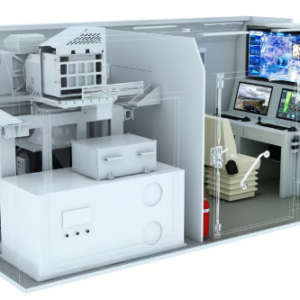
    Product Advantages lHighly integrated with military off-road platforms, it is easy and quick to deploy, giving the system significant advantages in mobility and availability. lThe laser weapon subsystem adopts an optical fiber beam combination system and laser and optical optimization design, providing excellent laser quality and photoelectric conversion efficiency, enabling the system to achieve higher…

  • Intercept Subsystem

    Intercept Subsystem

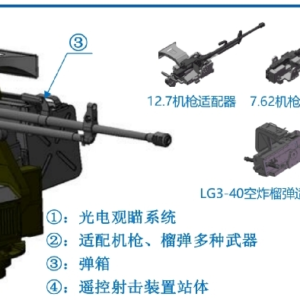
    Intercept devices

    No. Item Specification
    1 Applicable Light Weapons Supports remote control of 12.7mm machine gun, 7.62mm machine gun, 5.8mm machine gun, 35mm/40mm automatic grenade launcher
    2 Observation & Sight Device Equipped with electro-optical infrared sighting system
    3 Installation Mode Modular design, quick disassembly and convenient adapter replacement
    4 Deployment Mode Available for fixed installation or mobile application mounted on vehicle platform
  • Low-Altitude Sensing Engine · Golden Sentinel Series

    Low-Altitude Sensing Engine · Golden Sentinel Series

    System Architecture and Operating Principle

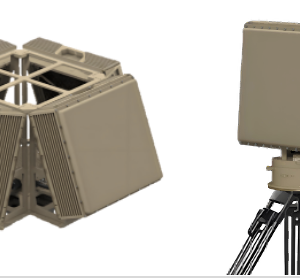
    The multi-panel array radar comprises four antenna array panels, an integrated signal-processing unit, an operator display and control equipment, a power supply module, and a ruggedized mounting structure. The four array panels are oriented toward different azimuth sectors, collectively achieving 360° omnidirectional low-altitude airspace surveillance through 2D AESA technology.

    •Comparative Advantage: Compared to single-panel configurations, multi-panel products deliver omnidirectional low-altitude surveillance without mechanical rotation. This architecture ensures 360° coverage while maintaining high-data-rate dedicated beam tracking and classification throughout the full azimuth, significantly enhancing track continuity, stability, and classification accuracy. The system provides higher-quality cueing data for downstream effectors and more reliable target intelligence for operator decision-making. (Single-panel radars provide this capability only in key area mode.)
  • Low-Altitude Sensing Engine·Ghost-Hunter

    Low-Altitude Sensing Engine·Ghost-Hunter

    Single-Panel Configuration

    The single-panel configuration product operates in two distinct modes, selectable based on mission requirements and deployment scenarios:

    (1) Full-Coverage Surveillance Mode

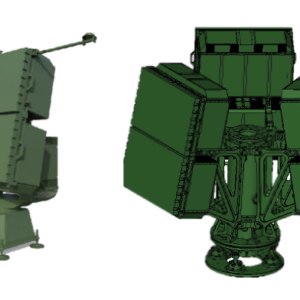
    This mode combines mechanical azimuth rotation of the antenna assembly with electronic elevation scanning. The antenna platform rotates continuously in azimuth while the phased array electronically steers the beam in elevation, achieving 360° omnidirectional low-altitude surveillance.

    (2) Key Area Surveillance Mode

    In this mode, the radar employs two-dimensional electronic beam steering in both azimuth and elevation to cover a designated sector. The system provides flexible beam scheduling capabilities, enabling concentrated attention on priority targets through adaptive dwell time allocation. This mode is particularly effective for focused surveillance of high-interest sectors where enhanced track quality and identification confidence are required.

    Three-Panel Configuration

    The three-panel configuration employs antenna arrays identical to those used in the single-panel system. Through strategic arrangement of three array panels, the system achieves complete 360° low-altitude airspace coverage using purely electronic scanning, eliminating the need for mechanical rotation.
    ·Each of the three panels is positioned to cover a 120° azimuth sector, with the three sectors combining to provide seamless omnidirectional coverage. This architecture offers several distinct operational advantages:
    Continuous 360° Electronic Coverage: purely electronic scanning
    Simultaneous Multi-Sector Surveillance: All three panels can track priority targets concurrently
    Enhanced Track Continuity: Seamless hand-off between panels ensures uninterrupted tracking
    Improved Revisit Rate: Higher update rates across the entire surveillance volume
    No Mechanical Vulnerabilities: Elimination of rotating components enhances reliability
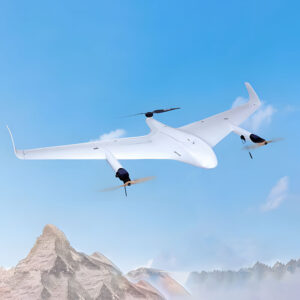
  • S-05 tiltrotor unmanned reconnaissance aircraft

    S-05 tiltrotor unmanned reconnaissance aircraft

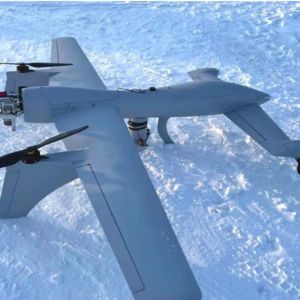
    The aircraft adopts a high lift ratio wing type, with an overall body layout and good flight performance in fixed wing mode;
    Optimizing the structural layout with longer endurance time and larger payload compartments;

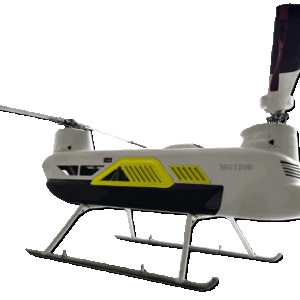
  • S-1200 "Air Camel" unmanned helicopter

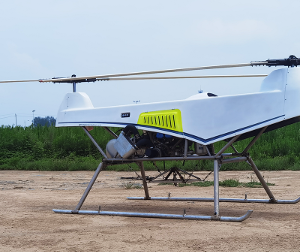
    S-1200 “Air Camel” unmanned helicopter

    Specification Details Transport Dimensions L 4.8 m × W 1.75 m × H 1.692 m Maximum Take-off Weight (MTOW) 1,200 kg Maximum Flight Speed 165 km/h Power System Two C145HT Aero Engines Maximum Payload 600 kg Cruising Speed 125 km/h Fuel Tank Capacity 280 L Service Ceiling 6,500 m Wind Resistance 10 m/s during take-off…

  • S-12000 Fixed Wing UAV

    S-12000 Fixed Wing UAV

    Product Features:

    •It adopts a high-rise ratio airfoil, which has good flight performance, long endurance time and optimized structural layout.
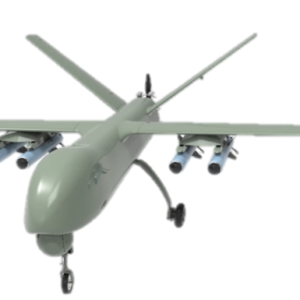
  • S-180 Fixed Wing UAV

    S-180 Fixed Wing UAV

    Product Features:

    •Rocket launch;
    •Large load, fast speed, long endurance.
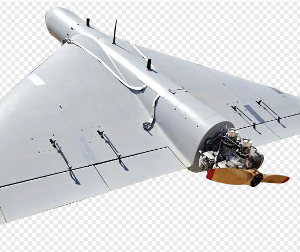
  • S-20 Fixed Wing UAV

    S-20 Fixed Wing UAV

    Product Features:

    •Barrel launch, catapult take-off;
    Fast cruising speed.

  • S-25C Vertical Takeoff and Landing Fixed Wing  Unmanned Aerial Vehicle

    S-25C Vertical Takeoff and Landing Fixed Wing Unmanned Aerial Vehicle

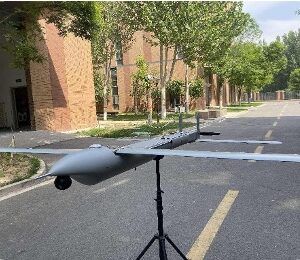
    The aircraft adopts a conventional fixed wing aerodynamic layout with a V-shaped tail and a high-performance glider wing
    shape, which has a high glide ratio and excellent glide performance, and can achieve long-term flight.

  • S-30

    S-30

    Product Features:

    •Vertical take-off and landing, no special site is required;

    •Eliminating the need for traditional levers, the rotors are mounted under the main wing and above the vertical tail to reduce the weight of the fuselage;
    •Both the main wing and the tail generate upward force, with good aerodynamics, and long endurance.
  • S-380 "Air Camel" 400 kg class unmanned helicopter

    S-380 “Air Camel” 400 kg class unmanned helicopter

    Specification Details Transport Dimensions L 3.5 m × W 1.45 m × H 1.692 m Maximum Take-off Weight (MTOW) 380 kg Maximum Flight Speed 145 km/h Power System C100 Aero Engine Maximum Payload 150 kg Cruising Speed 90–120 km/h Fuel Tank Capacity 100 L Service Ceiling 3,000 m Wind Resistance 10 m/s during take-off and…